For more information about the components of the research project see Appendix B.
BEE-BLIOGRAPHY
In March, we undertook the first review of the current research landscape, to create a BEEbliography, which you can explore in Appendix D.
THE SCIENTISTS
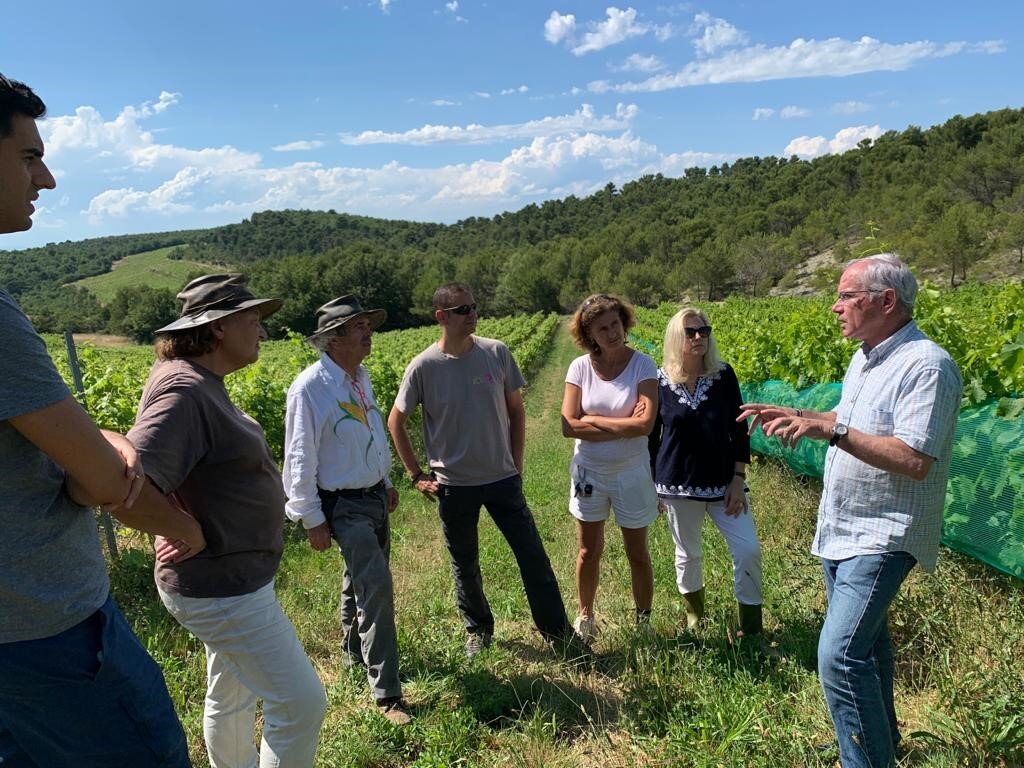
Our talented friend and Green Advisor, Katja Klopf, helped us scour the globe to find the best bee, cover crop and microbiome experts. We are honored to have been connected to world experts Professor Neal Williams (UC Davis), Professor Dave Goulson (University of Sussex), Professor Yves Le Conte (INRAE- Institut National de Recherche pour l'Agriculture, l'Alimentation et l'Environnement), plus our beloved Doctors Claude and Lydia Bourguignon, the world-renowned "living soils" scientists who have been advising us for over a decade.
Read their impressive BEEographies in Appendix C.
Our experts have met twice this past year, and the aim for the coming year is to draw up the protocol and diagram of scientific process and methodology for the research project and to appoint a research assistant to supervise work on the project at the vineyard.
THE FIRST EXPERIMENTS
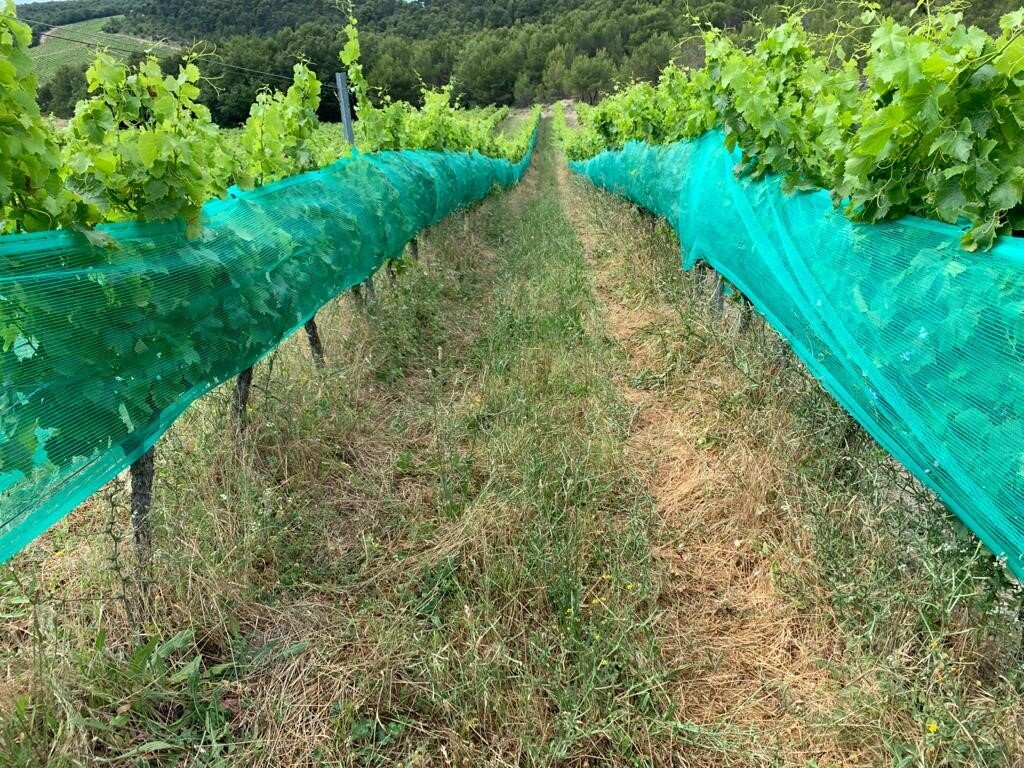
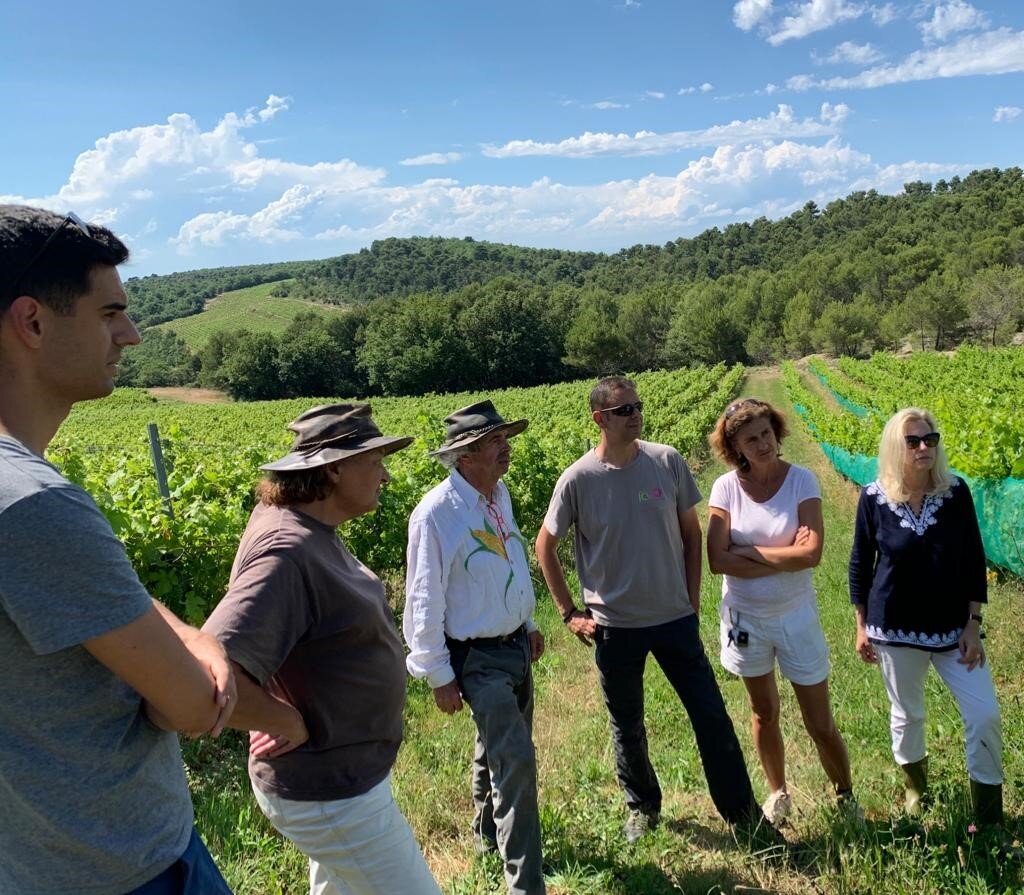
The first theory we have begun testing is whether bees help vines increase their yields on our property. By covering a section of vines with netting right before flowering, we prevented pollinators from accessing the nascent clusters with the aim of counting a difference in the number of berries (individual grapes) at harvest, and comparing this with a second section of vines that would have had the benefit of pollinators.
We purchased several mini-tanks to be able to vinify these two sections separately and begin testing a second, very important theory – whether the presence of bees and pollinators has an influence on the famous “terroir”, the revered ‘sense of place’ that comes through in fine wine – and the grapes from the netted and un-netted sections of vines have been harvested and vinified separately.
The next step in this process will be to carry out an initial ‘geosensorial’ taste test of the wines from these separate tanks, and then to begin iterative development of these experiments, with guidance from the relevant scientists in our team of experts.
We’re excited to continue the work that we’ve started. We know this has been a tricky year for us homo sapiens, but the natural world continues to thrive and support us. Bees are foundational to the delicate ecosystem and food supply chain that we rely on, and we thank you for your part in supporting our SustainaBEElity project!